You don't have a food problem.You have a found problem.
Your food is good. Your service is good. But the person deciding where to eat tonight never sees you. They ask Google. They ask Maps. And now, more and more, they ask ChatGPT. We get your restaurant named in all three.
Rather just talk it through? Call toll free 1-800-481-8638
What is restaurant advertising in 2026?
Restaurant advertising is the work of making your restaurant the one that gets named when a hungry person asks where to eat. That used to mean print ads and radio spots. Today it means three things: ranking in Google Search and Google Maps, getting cited by AI assistants like ChatGPT and Gemini, and appearing on the food and travel sites people actually browse. Paid ads can help. But if your restaurant is not findable, paid ads are just rent on attention you never keep.
Here is the part most agencies will not tell you. The way people choose restaurants changed faster in the last twelve months than in the previous ten years. They are still searching. They are just searching somewhere new.
Meanwhile, most restaurants are not set up for any of it. Recent research found that just 35% of small businesses have a Google Business Profile, and only 40% have a dedicated website (BrightLocal SMB Marketing Report, 2025). That is not a marketing gap. That is an open door.
Covers. Not impressions.
An empty seat at 7pm on a Friday is not a slow night. It is inventory that expired. You cannot sell it tomorrow. You cannot put it back in the walk-in.
Every other business gets a second chance at unsold stock. A restaurant does not. That is why we report on covers, calls, direction requests and reservations — never on impressions, reach or "engagement."
If a number we send you does not connect to a person sitting down and ordering, it does not belong in the report.
Illustration only. Scroll to fill the room.
Seven things every restaurant must do to fill tables
In order. Nothing here requires an agency. Most of it is free. If you only ever read one section of this site, read this one — then go do items one through three today.
Claim and complete your Google Business Profile
This is the single highest-leverage hour in restaurant marketing, and roughly two-thirds of small businesses have not done it. Claim the listing. Set exact hours, including holidays. Add your cuisine type, price range, and attributes like patio, takeout, and reservations. Then upload real photos of the food and the room — not stock images.
Put your menu on your site as real text
A menu locked inside a PDF or a photo is invisible. Google cannot read the dishes. AI assistants cannot quote your prices. When someone asks an AI tool for "green chile smothered burritos near me," the restaurants with readable text menus get named. The ones with a JPG do not exist. This one change does more for AI visibility than any other single fix.
Ask for reviews, then answer every single one
47% of consumers will not use a business with fewer than 20 reviews, and 74% only care about reviews written in the last three months. Answering matters as much as collecting: 80% of consumers say they are more likely to use a business that responds to all its reviews, and 42% are unlikely to use one that never replies. Generic copy-paste replies put off half of readers, so keep them short and specific.
Protect your star rating like it is a health score
Consumer standards jumped hard in a single year. 31% of consumers will now only use a business rated 4.5 stars or higher, up from 17% the year before. 68% require at least 4 stars, up from 55%. If you are sitting at 4.2, you are no longer "pretty good." You are below the cutoff for two-thirds of the people looking at you.
Make your site load fast on a phone
73% of local business searches start on a mobile device. Your site is being judged one-handed, on a phone, by someone standing on a sidewalk deciding between you and the place across the street. Hours, address, phone number and menu should be reachable in one tap with no pinching and no pop-up.
Get listed where AI tools actually read
AI assistants do not invent recommendations. They pull from structured listings, local directories, review platforms and food sites they trust. Being on those sources is how you get named. Being absent is how you get skipped. This is the work most restaurants have not started, which is exactly why it is still cheap to win.
Own the customer, do not rent them
Delivery apps take 15% to 30% per order, and the effective cost often lands between 30% and 40% once promotions, processing and refunds are counted. The average independent restaurant nets 3% to 5%. Use the apps for discovery if you want. But move repeat customers to your own ordering, your own list, and your own table.
Want this graded for your restaurant?
The scorecard further down runs through these seven items plus three more, gives you a letter grade, and tells you which one to fix first. It takes about ninety seconds and nothing is emailed to you unless you ask.
We help your restaurant come up where people are actually searching
Not where they searched in 2019. Where they search tonight.
How do I get my restaurant to show up on ChatGPT and AI search?
AI assistants build recommendations from sources they can read and trust: your Google Business Profile, your website's text menu and hours, structured data markup, review platforms, and local food directories. To be named, you need consistent business information across all of them, readable text instead of PDFs and images, and citations on sites the AI models already crawl. Restaurants that do this get recommended by name. Restaurants that do not are simply absent from the answer.
Google & Maps
Still the largest single channel by a wide margin, and still where the phone calls and direction requests come from. We work the local pack, the profile, the categories, the photos and the review engine.
AI assistants
ChatGPT, Gemini, Perplexity, Copilot and Google's AI answers. We structure your information so the models can read it, and get you cited on the sources they pull from.
Where people browse
Food and travel sites, local guides, directories. We own several of these outright, which means we can place you on them directly instead of hoping someone else will.
Why "just run some ads" stopped working
Paid ads buy a moment of attention. When the budget stops, the attention stops. Meanwhile the person who asked an AI assistant "where should I eat tonight in Denver" got back a short list of five restaurants — and no ad was involved in that answer at all.
Consumers are also trusting these answers. 40% of consumers now say they trust AI platforms for business recommendations, and 42% trust AI recommendations as much as traditional reviews. 82% read AI-generated review summaries, and nearly a quarter are willing to decide based on that summary alone.
Being in the answer is the new front page. There is no second position on a list of five.
Not sure where you stand right now?
Tell us your restaurant name and city on the phone and we will run it through the AI assistants while you are still on the call. Takes about five minutes.
The data behind all of this
We do not publish statistics we cannot source. Here is the research this entire site is built on, with the study and year for each figure so you can go read it yourself.
| Figure | What it means | Source |
|---|---|---|
| 6% → 45% | Consumers using ChatGPT and other AI tools for local business recommendations, in a single year. Now the third most popular recommendation source. | BrightLocal, Local Consumer Review Survey 2026 |
| 83% → 71% | Google's share of consumers using it to read local business reviews, year over year. | BrightLocal, Local Consumer Review Survey 2026 |
| 35% | Share of small businesses that have a Google Business Profile at all. | BrightLocal, SMB Marketing Report 2025 |
| 40% | Share of local businesses with a dedicated website. | BrightLocal, SMB Marketing Report 2025 |
| 97% | Consumers who read online reviews for local businesses. | BrightLocal, Local Consumer Review Survey 2026 |
| 47% | Consumers who will not use a business with fewer than 20 reviews. | BrightLocal, Local Consumer Review Survey 2026 |
| 74% | Consumers who only want reviews written in the last three months. | BrightLocal, Local Consumer Review Survey 2026 |
| 31% | Consumers who will only use a business rated 4.5 stars or higher, up from 17% the prior year. | BrightLocal, Local Consumer Review Survey 2026 |
| 54% | Consumers who visit a business website after reading positive reviews, up from 32% in 2019. | BrightLocal, Local Consumer Review Survey 2026 |
| 73% | Local business searches that begin on a mobile device. | BrightLocal, Consumer Search Behavior 2026 |
| 26.2% | Actual first-year failure rate for independent restaurants. Not 90%. | Parsa et al., Cornell Hotel & Restaurant Administration Quarterly, 2005 |
| 15–30% | Standard third-party delivery commission per order, with effective cost often reaching 30–40% after fees and promotions. | National Restaurant Association; platform pricing pages |
| 3–5% | Typical net profit margin for an independent restaurant. | National Restaurant Association, Operations Report |
Figures current as of August 2026. Where a study reports year-over-year change, both years are shown.
90% of restaurants do not fail in the first year
You have heard the number your whole career. Nine out of ten, gone in twelve months. Bankers repeat it. Landlords repeat it. It gets used to talk people out of opening, and to talk owners into panic decisions.
It is not true, and it never was. Researcher H.G. Parsa at Ohio State went looking for the source and reported that after an extensive literature review he could find no evidence of a 90 percent failure rate anywhere. The claim appears to trace back to a television commercial in the early 2000s. No study. No dataset. No peer review.
Parsa's own longitudinal study of 2,439 restaurants found a first-year failure rate of about 26% for independents, 19% in year two and 14% in year three. A separate analysis of Bureau of Labor Statistics data put first-year restaurant failure near 17% — lower than the roughly 19% rate for other service businesses.
We tell you this because we are not going to sell you with fear. Restaurants do not usually die because the food was bad. They die quietly, from not being found, one empty Tuesday at a time.
First-year restaurant failure
Parsa et al., Why Restaurants Fail, Cornell Hotel & Restaurant Administration Quarterly, 2005. BLS/UC Berkeley analysis, Luo & Stark, 2014.
What are your empty tables costing you?
Most owners have never run this number. It tends to land harder than any sales pitch. Everything happens in your browser — nothing is sent anywhere.
Empty Table Calculator
Annual revenue walking past your door, and what a small lift is worth.
That is revenue you cannot recover. An empty seat expires at closing time.
Estimate only, based on the figures you entered. Assumes 52 weeks of service. This is a planning tool, not a forecast or a guarantee of results.
Four more covers a night is not a marketing miracle. It is one accurate Google listing and a menu a search engine can read.
Where your next hundred guests actually come from
Most restaurant marketing money gets spent on the channel the owner is most comfortable with, not the one guests are using. Here is the real map, channel by channel, with what each one is worth and what it costs you to ignore it.
Where do restaurant customers find you in 2026?
The largest share still starts at Google Search and Google Maps, on a phone. From there the picture has splintered fast. The average consumer now consults six different review sources before choosing a business, AI assistants have become the third most popular recommendation source, and video platforms and Apple Maps are both climbing sharply. There is no single channel to win anymore. There is a set of surfaces you either appear on or you do not.
Google Search and Google Maps
Still the biggest single door, and still where the phone calls and the driving directions come from. But its share is moving. Google's use as a place to read local business reviews fell from 83% to 71% in a single year. That is not collapse — it is dominance loosening. It still deserves your first hour and most of your attention, and 73% of these searches begin on a phone. The practical work here is your Google Business Profile, your categories, your photos, your hours and your review velocity.
AI assistants
The fastest-moving channel in the category and the one almost nobody is working. Usage for local recommendations went from 6% to 45% in twelve months. Unlike a search results page, an AI answer usually names three to five businesses. There is no page two. You are either in the list or you are not mentioned at all, and the person never learns you existed. Being named requires readable text, consistent listings and citations on sources the models trust.
Review platforms, plural
The single biggest change in how people vet a restaurant is that they no longer trust one source. The average consumer now uses six review sites. Facebook, Tripadvisor, Better Business Bureau, Trustpilot and Yellow Pages all gained usage over the past year. Concentrating every review request on Google leaves five other surfaces looking abandoned.
Apple Maps, which almost everyone ignores
Apple Maps nearly doubled in usage in one year, climbing from 14% to 27%. It ranks fourth for where people write reviews, ahead of where it ranks for reading them, because Apple's rating system is a single tap rather than a written review. Most restaurants have never claimed their Apple Business Connect listing. Every iPhone user who asks Siri for directions or searches Maps is being served whatever Apple guessed about you. Claiming it is free and takes about twenty minutes.
Video: YouTube, Instagram, TikTok
Short video is now a recommendation channel, not just a branding one. YouTube, Instagram and TikTok all gained ground as places people go for local business recommendations, and TikTok has launched a Local Explorer program that mirrors Google Local Guides. You do not need a content studio. You need to make the room and the plates worth filming, thank the people who post about you, and ask permission to reuse their clips.
Your own website
The end of nearly every path. 54% of consumers visit a business website after reading positive reviews, up from 32% when that question was last asked in 2019. That is the moment the decision closes. It is also where a large share of restaurants lose the guest, because only about 40% of local businesses have a dedicated site at all, and many of those that do hide the menu in a PDF and the phone number in an image.
What died, and why it matters
One channel fell off a cliff. Local news sites dropped from 48% to 29% as a source of local business recommendations in a single year, driven by newspaper closures and by AI answers absorbing the traffic that used to reach those publishers. If your advertising plan still leans on the local paper, that is the number to look at before you renew.
The lesson underneath all of this is not that Google stopped mattering. It is that a single-channel restaurant is now a fragile restaurant. The places that stay full are the ones showing up consistently across six or eight surfaces, with the same hours, the same phone number and the same menu on every one of them.
Restaurant Visibility Scorecard
Ten honest questions. About ninety seconds. You get a letter grade and the one thing to fix first. Nothing is emailed, stored or sent — this runs entirely in your browser.
Grade your restaurant
Answer honestly. Nobody sees this but you.
Are you in the AI answer? Find out in 30 seconds.
This is the test almost no restaurant owner has run. Fill in two boxes, copy the prompt, paste it into ChatGPT or Gemini, and see whether your restaurant is named. Most owners are surprised. Not always pleasantly.
AI Search Visibility Test
Build your prompt, run it, then score what came back.
Now paste it into ChatGPT, Gemini, Perplexity or Copilot. Read the answer, come back, and check off what you find.
Results vary by model, by day and by how the question is worded. Run it two or three times for a fair picture. If you never appear, that is the finding.
NFC menus, supercharged to be found on Google and AI search
A QR code opens a PDF. That is where most restaurants stop, and that is why their menu is invisible.
We build NFC menus on LinkRestaurants.com as real, indexable web pages. Every dish is text. Every price is readable. Every page carries structured data that tells Google and AI models exactly what you serve, where you are, and when you are open.
So the tap does two jobs at once. The guest at table nine gets your menu instantly. And that same menu becomes a page that can be crawled, cited and recommended — the difference between a menu your guests can read and a menu the entire internet can read.
- Guests tap a card or table tent. No app, no pinching, no download.
- Every dish is real text, so search engines and AI can read it.
- Change a price or 86 an item and it updates instantly for everyone.
- Structured menu data helps you surface for dish-level searches.
- Works alongside a QR code for guests with older phones.
Why dish-level text matters
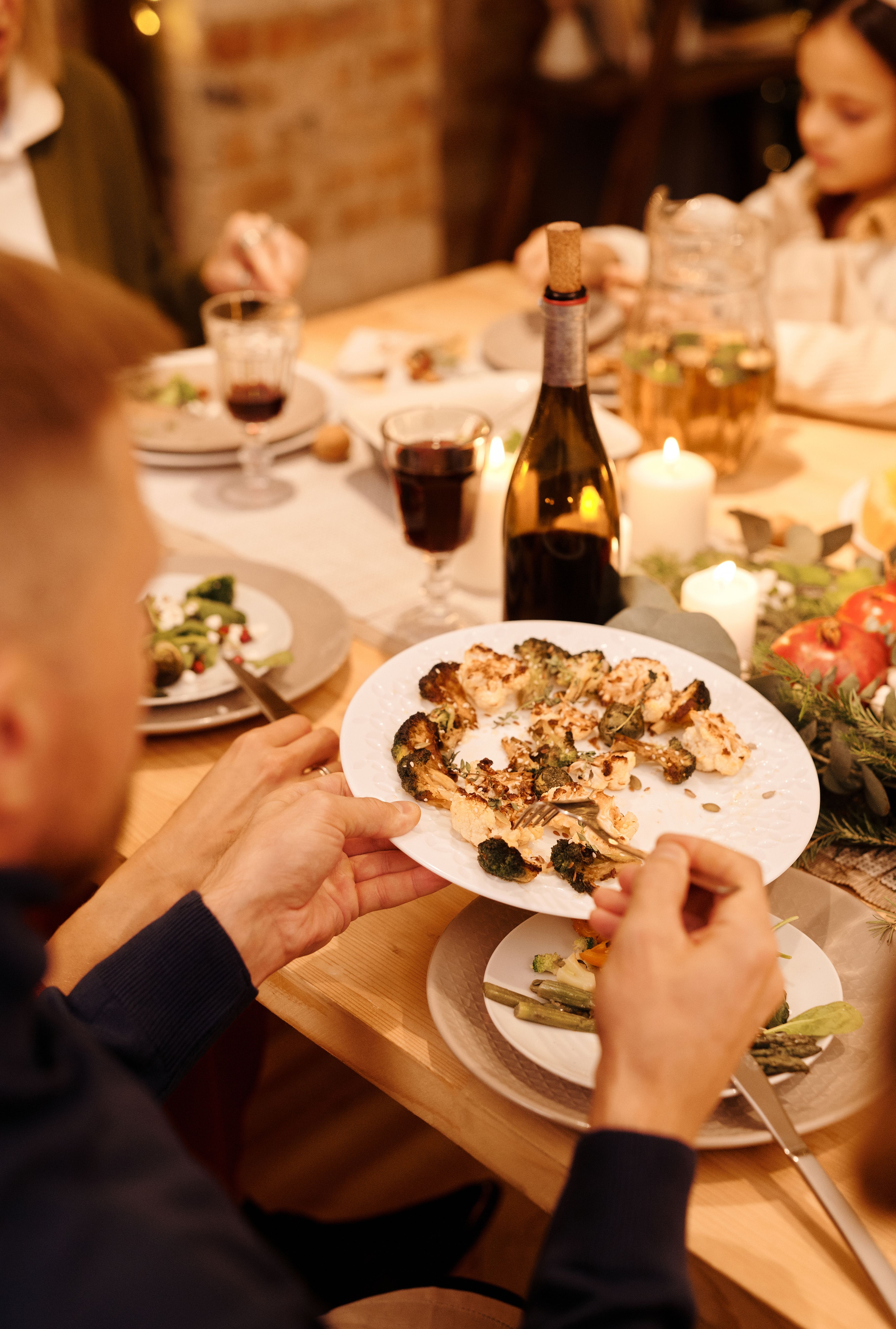
When someone asks an AI assistant for "birria tacos near me," the model needs to know you serve birria tacos. If that word only exists inside a PDF image, you are not in the running. A text menu puts every dish you sell into play as a searchable term.
We don't just advertise you. We own the places people look.
Most agencies pitch you on getting listed somewhere. We built the somewhere. These are our own properties, which means we can place your restaurant on them directly instead of asking permission.
One phrase. Tens of thousands of searches a month.
"Local food near me" is one of the highest-volume, highest-intent phrases in the restaurant category — Google's Keyword Planner puts it in the tens of thousands of US searches per month as of 2026. It is the phrase people use at the exact moment they are hungry and undecided. We own the matching domain and we run it as a real directory.
When we place your restaurant there, we are not buying you an ad. We are putting you inside the answer.
Five mistakes we find in almost every restaurant we look at
Not theoretical problems. These are the five things that turn up over and over when we pull a restaurant's visibility apart. Every one of them is free to fix, and every one is costing covers right now.
The menu is a PDF
This is the most common and most expensive mistake in the category. A PDF menu, or a photographed menu, is a locked box. Google cannot read the dish names. AI assistants cannot quote your prices or tell someone you serve gluten-free pasta. Every dish you sell — and each one is a phrase somebody types into a search bar — is invisible.
A restaurant with forty items on a text menu has forty chances to be found. The same restaurant with a PDF has zero. Fixing this takes an afternoon and it is usually the single highest-impact change available.
Holiday hours were never set
Regular hours get entered once and then forgotten. Then Thanksgiving arrives, or the Fourth of July, or a Monday you always close, and Google confidently tells four families you are open. They drive over. They find a dark room. Some of them leave a one-star review about it, and that review sits on your profile for years.
Special hours can be set a full year ahead in about fifteen minutes. Almost nobody does it. Put it on the calendar for the first week of January and it never bites you again.
The photos are three years old
The menu changed. The dining room got redone. The photos did not. Worse, on a lot of profiles the most recent images were uploaded by customers, which means the first impression of your food is somebody's dim phone snapshot of a half-eaten plate.
Fresh photos do two jobs at once: they show people what they are actually walking into, and they signal to Google that the profile is actively managed. Ten good shots a month, taken on a phone in daylight near a window, beats a professional shoot you did once in 2023.
Nobody answers the reviews
Not the good ones, not the bad ones. The owner reads them, gets annoyed or pleased, and closes the tab. Meanwhile 89% of consumers expect a response, 80% say they are more likely to use a business that replies to all of its reviews, and 42% are unlikely to use one that never replies.
Speed has also shifted hard. 19% of consumers now expect a response the same day, up from 6% the year before, and 32% want one by the next day. A restaurant with fifty glowing reviews and zero owner responses reads as absent — to the next customer and to Google's ranking systems, which weigh engagement signals.
The name, address and phone number disagree across listings
Suite number on one, not the other. Old phone number still live on a directory from 2019. "St" here and "Street" there. A previous owner's business name still attached somewhere. Each one seems trivial. Together they make both Google and every AI model less confident that they know who and where you are.
Confidence is the whole game in local search. A model choosing five restaurants to recommend will quietly skip the one whose details it cannot verify. Consistency is boring, unglamorous work, and it moves rankings more reliably than almost anything else on this list.
Notice what is not on this list
Ad budget. Social media follower counts. A rebrand. A new logo. None of the five most common, most costly problems we find require spending money — they require an afternoon and someone paying attention. That is genuinely good news, and it is also why we would rather tell you the truth than sell you a retainer you may not need.
What actually happens in the first 30 days
You should know exactly what you are buying before you buy it. Here is the sequence, in order, with nothing hidden behind a discovery call.
The audit
We pull your Google Business Profile, check every listing we can find, run your restaurant through ChatGPT, Gemini and Perplexity to see whether you get named, test your site on a phone, and read your last fifty reviews. You get the findings in plain language, including the parts that are already fine.
The free wins
Everything that can be fixed immediately gets fixed immediately: claimed profile, corrected categories, accurate hours including holidays, attributes, fresh photos, Apple Business Connect claimed. These are the changes that can move within days rather than months.
The menu and the site
Your menu comes out of the PDF and becomes real text with structured data behind it, so every dish becomes findable. Page speed, mobile layout, one-tap calling and clear hours get handled at the same time. If you want NFC menus, this is when they get built.
Listings, reviews and placement
Name, address and phone get made identical everywhere they appear. A review request system goes in so asking becomes automatic rather than something you remember on a slow Tuesday. Then you get placed on the network properties we own.
After month one, the work becomes maintenance and depth: dish-level and neighborhood content, review cadence, monitoring how you appear in AI answers, and watching the metrics that connect to covers. We report on calls, direction requests, menu views and reservations. Not impressions.
What we will not do: lock you into a long contract, buy reviews, submit you to hundreds of junk directories, or promise a ranking by a date. Anyone offering those three things is selling you risk.
Want the 30 days scoped for your restaurant?
We will build the plan around one number: how many additional covers a month you actually want. Then we price backward from there.
Restaurant marketing terms, defined
Agencies use jargon to make simple things sound expensive. Here is what the words actually mean, so nobody can sell you a service you cannot describe.
Cover
One guest served. Not one table, one table turn or one ticket — one person who sat down and ordered. Covers are the unit restaurants actually run on, which is why every number on this site is expressed in them.
Google Business Profile (GBP)
The free listing that controls how your restaurant appears in Google Search and Google Maps: hours, photos, phone, directions, reviews and attributes. Formerly Google My Business. Just 35% of small businesses have one.
Local pack
The block of three business listings with a map that appears near the top of local search results. It captures a large share of clicks and calls for "near me" style searches, which makes those three slots the most valuable real estate in local search.
NAP consistency
Name, address and phone number matching exactly everywhere your restaurant is listed. Mismatches reduce how confident search engines and AI models are about your business, and low confidence means fewer recommendations.
Schema / structured data
Hidden code on a web page that tells machines what things are: this is a restaurant, this is its cuisine, these are its hours, this is a menu item that costs fourteen dollars. It is how a search engine reads a page as facts rather than as text.
AIO and GEO
AI optimization and generative engine optimization. Both describe the work of getting cited inside an AI answer instead of ranked in a list of links. The tactics overlap heavily with SEO, but AI visibility rewards being quotable and verifiable.
First-party ordering
Orders that come through your own website or app rather than a delivery marketplace. You keep the margin and, more importantly, the customer's contact information. Marketplace orders give you neither.
Citation
Any online mention of your business name, address and phone, whether or not it links to you. Directories, food sites and local guides all count. Citations are a major input to local rankings and to which businesses AI models feel safe naming.
Review velocity
How steadily new reviews arrive, as opposed to how many you have in total. It matters because 74% of consumers only want reviews from the last three months. Forty reviews from 2022 read as a restaurant that used to be good.
Dish-level search
Searching for a specific food rather than a category — "birria tacos near me" instead of "Mexican restaurant." These searches carry very high intent and are almost impossible to win if your menu is not readable text.
Restaurant advertising services
Everything below points at one outcome: more people sitting at your tables. If a service does not move that number, we do not sell it.
Google Business Profile
Claim, complete, categorize and defend your listing. Photos, hours, attributes, menu links, service areas, and the review engine that keeps your rating above the cutoff.
Restaurant SEO
Rank for the dishes and neighborhoods that bring people through the door. Text menus, location pages, structured data, and the local signals Google uses to build the map pack. See how it works.
AI search visibility
Get named by ChatGPT, Gemini, Perplexity and Google's AI answers. Clean structured data, consistent listings, and citations on sources the models actually read.
NFC and QR menus
Tap-to-open menus built as real indexable pages on our LinkRestaurants network. Update prices instantly. Make every dish a searchable term. Learn more.
Network placement
Featured spots on the food, city and travel properties we own outright, including LocalFoodNearMe.com and BestRestaurantDenver.com. Real placement, not a directory submission.
Websites that convert
Fast, mobile-first restaurant sites with readable menus, one-tap calling and clean schema. Built by our website designer team, not dropped into a template.
Tell us how many new customers a month you want and we will price the shortest path to it. Or request a written quote.
Your servers are your highest-margin advertising
Filling the room is half the job. What happens after they sit down decides your night. A server who can recommend a starter, pair a glass, and land dessert lifts check average without a single dollar of ad spend — and it is a trainable skill, not a personality trait. MySalesHelp.com teaches ethical selling built on one rule: only recommend what genuinely makes the guest's night better.
Restaurant advertising questions
What is restaurant advertising?
Restaurant advertising is the work of getting your restaurant found and chosen by people deciding where to eat. In 2026 that means three channels: Google Search and Google Maps, AI assistants like ChatGPT and Gemini, and the food and city guide sites people browse. Paid ads are one tool inside that, but visibility is the foundation. Without it, ads are rent you pay forever.
How do I get my restaurant to show up on ChatGPT?
AI assistants pull from sources they can read and trust. Start with a complete, accurate Google Business Profile. Put your full menu on your website as real text, not a PDF or an image. Add structured data that identifies your cuisine, hours, location and price range. Then build citations on local directories and food sites the models already crawl. Consistency across every listing matters more than volume — conflicting hours or addresses make a model less likely to name you.
How much does restaurant advertising cost?
It depends on how much is already in place. A restaurant with a claimed Google profile and a working website needs far less than one starting from zero. We scope every engagement against what a single additional cover per night is worth to you, using the same math as the calculator on this page. If we cannot make that math work in your favor, we will tell you rather than take the project. Call 1-800-481-8638 or request a written quote and we will give you a real number.
How do I get a quote for my restaurant?
Two ways, both fast. Call 1-800-481-8638 toll free and we will scope it on the phone, or fill in the form on our contact page and we will send a written quote within one business day. The one question that shapes the price more than any other is how many additional customers per month you want, so have a number in mind — even a rough one.
Do I really need a Google Business Profile?
Yes, and it is still the highest-return free hour in restaurant marketing. Recent research found just 35% of small businesses have one. It is where your hours, phone number, photos, directions and reviews live, and it feeds both Google Maps and the AI tools that increasingly answer "where should I eat." A restaurant without a claimed profile is relying on someone else's guess about its own information.
Are NFC menus better than QR codes?
They solve the same problem more gracefully — a tap instead of a camera, no focusing and no app. But the real difference is what sits behind the tap. Most QR codes open a PDF, which search engines and AI tools cannot read. We build NFC menus as real web pages where every dish is text with structured data, so the menu works for your guests at the table and for the search engines at the same time.
How long does it take to see results?
Google Business Profile fixes can move within days, sometimes hours — corrected hours, new photos and accurate categories are the fastest wins in local search. Organic rankings for competitive dish and neighborhood terms typically take three to six months. AI citation is less predictable because each model refreshes on its own schedule. Anyone promising page one in thirty days is guessing or lying.
Should I stop using DoorDash and Uber Eats?
Not necessarily — but know what they cost. Standard commissions run 15% to 30% per order, and the effective cost often lands between 30% and 40% once promotions, processing and refunds are counted, against a typical independent net margin of 3% to 5%. The sustainable pattern is to use the apps for discovery and then move repeat customers to your own ordering, your own list and your own dining room, where you keep both the margin and the customer's information.
What is the difference between SEO, AIO and GEO?
SEO is search engine optimization — getting ranked in traditional Google results and Maps. AIO and GEO both describe optimizing to be cited by AI systems: appearing inside a ChatGPT recommendation or a Google AI answer rather than in a list of blue links. The underlying work overlaps heavily. Clean structured data, readable content and consistent listings serve all three. The difference is that AI visibility rewards being quotable, while classic SEO rewards being rankable.
How do I get more Google reviews?
Ask. Research shows 78% of consumers were asked to leave a review in the past year, and 83% of those asked went on to write one. Ask at the moment the guest says the meal was good, make it one tap from the check or a table card, and never offer anything in exchange — incentivized reviews violate platform rules and now carry legal risk in the US. Then reply to every review, briefly and specifically.
Do you work with restaurants outside Denver?
Yes. We are based in Denver and our Colorado network runs deepest here, but the search and AI visibility work is location independent and we take restaurants nationwide. Local network placement on our Colorado properties naturally applies to Colorado restaurants, while Google, AI search, menu and website work applies anywhere. Our number is toll free from anywhere in the US: 1-800-481-8638.
Tell us about your restaurant
No pitch deck, no discovery call gauntlet. Tell us the name and the city and we will look at what is actually happening with your visibility, then tell you what we find — including if the answer is that you do not need us.
Call us toll free
Fastest way to a real number. Ask for a custom quote.
- We check your Google Business Profile and listing accuracy.
- We run your restaurant through the AI assistants and see if you appear.
- We look at whether your menu is readable by search engines.
- You get the findings whether or not you hire us.
Get your free visibility check
Usually back within one business day. Prefer to talk? Call 1-800-481-8638.